Why the Room You Create Matters
Poor planning can leave neighbors unheard, expose unclear expectations, and turn a valuable encounter into a frustrating campaign appearance. The preventable failures usually begin before anyone sits down: an invitation obscures the event’s purpose, the room excludes a resident who expected to participate, or opening remarks consume the time meant for questions.
A small neighborhood gathering still offers something difficult to reproduce elsewhere. Residents can connect a candidate’s policy positions to the roads, schools, federal programs, budget choices, and public services they encounter in north Texas communities. They can also ask who holds authority, what trade-offs a proposal requires, and how the public could judge whether a commitment was kept.
The room therefore functions as part of the civic process. Its invitation, layout, timing, question rules, and follow-up practices all affect whether voter participation feels meaningful.
Protect Question Time
For a 60-minute gathering, reserve at least 30 minutes for moderated questions and another 8 minutes for neighbor follow-ups. State the format and participation rules in the invitation, then repeat them during the first 3 minutes of the event.
A reliable framework starts with five decisions: choose a clear civic purpose, invite people who can realistically attend, make access part of the room design, turn local concerns into fair policy questions, and document what remains unanswered.
Choose the Event’s Civic Purpose Before Inviting Anyone
Classify the gathering first. An event organized to support one congressional candidate may include an endorsement, a campaign introduction, and a request for volunteers. A nonpartisan event inviting multiple candidates requires equal treatment in introductions, response windows, follow-up rules, and question selection.
The distinction should appear plainly in the invitation. A host who advertises a neutral neighborhood forum, then endorses one candidate and provides campaign sign-up sheets, creates a trust failure even when the discussion remains polite. Attendees made their decision to participate under a different premise.
Write a Narrow Purpose Statement
A workable purpose statement runs 20 to 35 words and identifies the office, audience, format, and intended outcome. It might describe a gathering for neighbors to hear a congressional candidate’s positions on district concerns and record policy questions that require later answers.
Other legitimate purposes include introducing a candidate to undecided neighbors or helping volunteers understand campaign priorities. Combining all three tends to produce conflicting expectations about persuasion, scrutiny, and participation.
Confirm the Operating Rules
Seven to 10 days before the gathering, confirm whether remarks are on the record, whether journalists may attend, whether photography or audio recording is permitted, and which campaign staff members will be present. Review applicable campaign-finance, venue-use, spending, and reporting requirements before purchasing refreshments, printing campaign materials, coordinating promotion, or treating use of a home as a campaign resource.
Federal requirements relevant to a U.S. House campaign may apply alongside Texas or local rules governing the host, venue, spending, or another office represented at the event. That scope should be checked against the actual format rather than inferred from the candidate’s office alone.
Build a Guest List Neighbors Can Actually Join
Build the list from the declared purpose and the room’s safe capacity. Then ask whether it includes residents affected by the selected issues who are not already active on the campaign trail. A room composed entirely of familiar supporters may serve an organizing purpose, but it offers a narrow account of district concerns.
Send the first invitation 10 to 14 days before the gathering and a final reminder 24 to 48 hours beforehand. Include the candidate’s name, office sought, disclosed format, complete location instructions, start and end times, accessibility information, attendance expectations, and a contact for accommodation requests.
Collect Only What the Event Needs
- Name and reply address
- Number of people attending
- Accommodation request, when relevant
- A separate, unchecked choice authorizing contact information to be shared with the campaign
Permission deserves a real choice. Keep the attendance list separate from campaign-contact authorization and explain whether the host, campaign, or both will retain each record.
Assign responsibility before the event: one person for the door and check-in, one for accessibility requests, one for campaign communication, one for timekeeping, one for question collection, and one for follow-up. At a very small gathering, a person may cover two roles. The moderator should remain free from door duty so the program can begin and end on time.
Confirm the candidate’s arrival window, departure deadline, staff count, speaking format, and security concerns 3 to 5 days before the final reminder goes out.
Set Up the Living Room for Equal, Useful Access
Lay out the room from the entrance inward. Establish an unobstructed route, identify several seating choices, and place check-in away from the doorway before positioning the candidate and moderator.
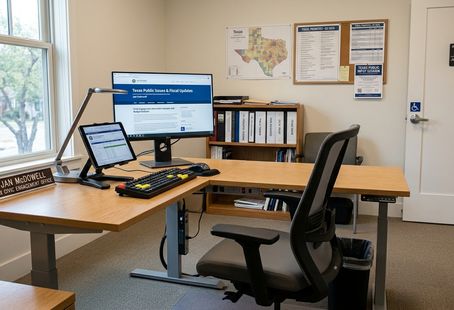
A shallow semicircle or open U-shape allows the candidate to see every attendee. Keep campaign staff and frequent supporters from forming a front-row cluster that becomes an informal inner circle. The arrangement should make each question feel directed into a shared conversation rather than across a private divide.
Walk the Route Before Doors Open
Complete the physical setup 45 to 60 minutes before arrival. Walk from the entrance to the seating area and restroom without moving chairs, bags, cords, or a check-in table.
A private living room may seat a dozen neighbors and still be unsuitable when the only entrance has steps, the restroom route is constrained, or no safe alternative is available. Moving to an accessible community room or offering remote participation then becomes a substantive planning decision.
Prepare the Working Materials
- One question card and pen per expected attendee, plus extras
- Name tags and water
- A visible countdown timer
- One clearly identified surface for campaign literature
- Separate forms for attendance and campaign-contact permission
Read or display rules for interruptions, personal attacks, photographs, recording, privacy, and question selection in no more than 90 seconds. Short rules are easier to understand, apply, and defend consistently.
Turn Neighbor Concerns Into Fair Policy Questions
A useful question moves through six stages: local problem, candidate position, proposed action, governing authority, likely trade-off, and public accountability. This ladder keeps the discussion connected to both Texas priorities and the actual powers of Congress.
- Describe one local concern.
- Ask the candidate’s position.
- Request a specific federal action.
- Identify the congressional authority or process involved.
- Surface the fiscal or practical trade-off.
- Ask which public action, vote, filing, or record residents should watch.
For example: “What should Congress do about this issue? Which congressional authority or process would you use? What trade-off would you accept? What public action or record should residents watch?” That sequence makes fiscal accountability testable without demanding a complete legislative blueprint on the spot.
Keep the Prompt Focused
The initial prompt should address one issue and take roughly 20 to 35 seconds to read aloud. Background that would turn the question into a speech belongs on a second card or in a brief moderator follow-up.
Collect cards during the 15 minutes before the program and throughout the discussion. Sort them into office-relevant topics, duplicates, and matters requiring factual verification. Questions asking a House candidate to promise action outside congressional authority should be redirected toward influence, oversight, legislation, appropriations, or constituent service.
Leave Claims Pending
An unanswered claim about a federal program, district project, vote, or budget line should remain visibly pending until a primary document or another reliable source is supplied. A moderator’s confidence does not complete the verification.
When multiple candidates attend, use the same response window, rotation, follow-up rule, and selection standard for each participant.
Run the Conversation Without Letting It Drift
Build the run of show backward from the candidate’s confirmed departure time, protecting the question period first. For a 60-minute event, use 3 minutes for the welcome and format disclosure, 4 for a factual introduction, 8 for opening remarks, 30 for moderated questions, 8 for neighbor follow-ups, 4 for closing remarks, and 3 for unanswered items and next steps.
The host’s introduction should identify the candidate, office sought, and relevant public or campaign background. A long endorsement or biography consumes the scarce portion of the evening that neighbors can use to examine policy.
Use Brief, Predictable Interventions
Give each speaker a silent warning with 30 seconds remaining and a stop signal at the agreed limit. When intervention becomes necessary, the moderator can rely on prepared language:
- For an overlong answer: “I am going to pause you so we can hear the answer to the question and leave time for other neighbors.”
- For an unanswered question: “Before we move on, what action would you take and what authority would you use?”
- For a personal attack: “Please address the policy or public record, not the person.”
- For a disputed claim: “We do not have a reliable source in the room, so we will record that claim and request a sourced answer after the gathering.”
Set an escalation path before doors open: reminder of the rule, direct warning, brief pause, and removal by the designated host or security contact if conduct becomes threatening or repeatedly prevents participation. Consistent enforcement protects the discussion without turning moderation into a contest for attention.
Close the Loop While the Conversation Is Fresh
End by reading the unresolved-question list aloud. Assign every item to a named host or campaign contact and tell attendees how responses will reach them.
Send the first follow-up within 24 to 48 hours, while the question log and speaker attributions remain easy to check. Separate direct candidate statements from host notes, sourced corrections, and pending claims. Give the campaign contact a defined response window, such as 5 to 7 calendar days, and label unanswered items as pending.
Review the Event as Civic Work
Within 72 hours, hold a 20-minute host-team review covering blocked routes, seating problems, unanswered policy themes, interruptions, timing failures, and privacy concerns. Assign one concrete change to an owner before planning another gathering.
Share photographs, recordings, attendee contact details, and campaign materials only under the permissions presented during registration or at the event. Trust survives follow-up when the host handles people’s information as carefully as their questions.
Article I, Section 2 of the U.S. Constitution states that members of the House of Representatives are chosen “every second Year,” placing each neighborhood conversation within a civic cycle that returns every two years.