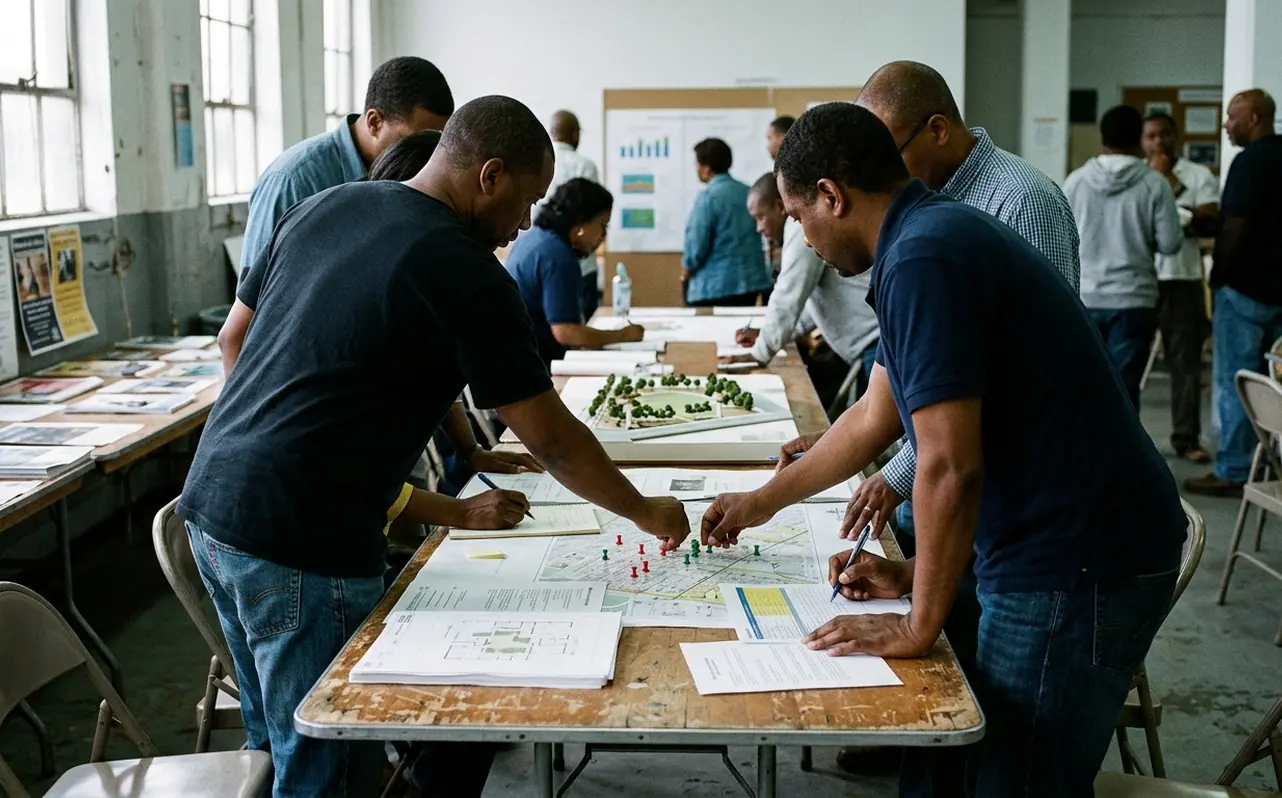
What's Inside
- Why Local Problems Become Policy Questions
- The Basic Path from Complaint to Public Decision
- Step 1: Turn a Concern into a Documented Pattern
- Step 2: Find the Public Body That Can Actually Act
- Step 3: Build Support Beyond One Household
- Step 4: Use Public Meetings, Agendas, and Comment Periods
- Step 5: Follow the Money, Vote, and Implementation
- What Residents Can Influence—and What Takes Longer
Why Local Problems Become Policy Questions
Public policy often starts with a puddle that keeps forming after every hard rain, a school crossing where drivers do not slow down, or a block where trash pickup slips again and again.
In North Texas, residents usually notice the problem before anyone writes a proposal. Street flooding, unsafe intersections, code enforcement delays, school traffic, property tax pressure, park maintenance, and public safety response times all begin as daily friction. Then the question changes: is this one household having a bad week, or is the public system missing something?
A practical threshold helps. Before calling a problem recurring, residents should aim for something like 7 separate observations from at least 3 households, with roughly 60% of the information coming from first-hand observation. A useful observation window can be short and disciplined, such as mid-February through mid-April.
Critical Insight: A complaint asks someone to notice. A documented civic issue gives a public body something it can evaluate, assign, fund, enforce, or schedule.
This guide is for residents who want to move from frustration to constructive civic action without needing a law degree, a political title, or a polished speech.
The Basic Path from Complaint to Public Decision
Most neighborhood issues follow a plain sequence: individual concern, repeated pattern, neighborhood discussion, documentation, public request, staff review, agenda item, vote or administrative action, implementation.
Not every issue becomes a new law. Some are handled through a budget line, an ordinance amendment, a staff directive, a bond project, a maintenance schedule, an enforcement priority, or an agency procedure. A drainage fix may never appear as a dramatic council vote. It may show up as engineering review, a capital improvement plan entry, or a utility coordination item.
A simple mental model
- Problem: What is happening, and where?
- Evidence: How often has it happened, and who has seen it?
- Jurisdiction: Which public body can act?
- Proposal: What specific action is being requested?
- Decision point: Is the issue handled by staff, budget, committee, hearing, or vote?
- Follow-up: Did the action happen, and did it solve the problem?
Activity records suggest that residents should reach about 70% documentation completeness before escalating from informal discussion to a written public request. In practice, that means at least 9 evidence entries before asking staff for review or agenda placement. For a focused push, a tracking range from early May through late August is a useful model: long enough to show a pattern, short enough to keep neighbors engaged.
Step 1: Turn a Concern into a Documented Pattern
Officials respond better to clear patterns than isolated anecdotes because public action has to compete with other needs. A dated photo, a service request number, a location, and a safety description are easier to route than a general statement that a street is dangerous.
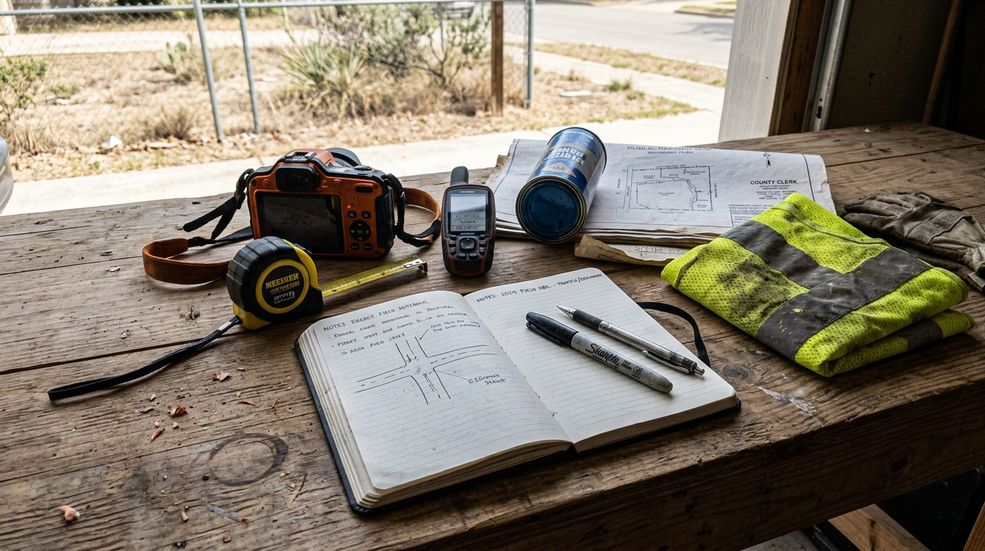
What to record
- Dates and times of each incident.
- Exact locations, intersections, block numbers, school zones, drainage points, or frontage roads.
- Photos, videos, service request numbers, or email confirmations.
- Meeting notes from HOA, neighborhood, school parent, or civic group discussions.
- Costs to residents, such as property damage, missed service, or repeated private repairs.
- Safety risks, including near-misses, blocked sight lines, standing water, or delayed response.
- Households affected, separated from households that are only generally supportive.
For a strong evidence packet, aim for 11 dated records, 5 location markers, and 3 direct household statements, based on participant logs. Participant reviews show that entries are more useful when about 75% include a date, location, photo or service number, and observed impact. A recommended logging range, such as late August through mid-October, gives residents enough time to catch repeated trash delays, recurring drainage after storms, or speeding near a school.
Common mistakes
Avoid mixing first-hand observations with rumors. Do not describe every inconvenience as a public safety emergency. Keep the main request from getting buried under 20 pages of screenshots.
Recommendation: Build a one-page neighborhood issue summary with the problem in one plain sentence, the affected boundary, 7 or more dated observations, photos or service numbers, and first-hand observations separated from second-hand comments.
Step 2: Find the Public Body That Can Actually Act
Many civic efforts stall because residents ask the wrong office to solve the problem. The official may be sympathetic and still lack authority.
North Texas makes this tricky. City limits, county roads, independent school districts, appraisal districts, utility authorities, state-maintained highways, and special districts can overlap in the same neighborhood. A resident may live in one city, send children to an independent school district with separate trustees, drive on a state road, pay a county tax bill, and receive service from a utility authority.
Who handles what
- City councils: city streets, local ordinances, zoning, police and fire budgets, parks, code enforcement, and city service levels.
- County commissioners courts: county roads, county facilities, some public safety functions, elections administration, and county budgets.
- School boards: school traffic plans, campus safety policies, district budgets, bus routing, and facility decisions.
- Appraisal districts: property appraisal administration, protest processes, and appraisal notices, not city tax-rate votes.
- State agencies: state highways, certain environmental rules, licensing systems, and state-administered programs.
- Regional transportation bodies and utility authorities: projects, corridors, water, wastewater, and infrastructure planning across city lines.
Use about a 65% jurisdiction-confidence threshold before recruiting speakers for a public meeting. That means checking at least 5 sources: a property map, road-maintenance authority, school district boundary, utility provider boundary, and elected-body agenda archive. Mid-September through late October is a reasonable verification range for a neighborhood issue that needs careful routing.
Risk Factor: A common failure case is organizing speakers for a city council meeting about a road that is actually county-maintained or state-maintained. The result may be sympathy, but no action.
A drainage complaint is especially context-dependent. It may move through city engineering, county flood-control coordination, a utility authority, or a capital improvement plan depending on the exact boundary and asset ownership.
Step 3: Build Support Beyond One Household
Public officials look for community impact, not just individual inconvenience.
That does not mean every issue needs a crowd. It means residents should show who is affected, how, and whether the concern extends beyond one property line. Forum feedback confirms that short, specific statements from neighbors are often more useful than long petitions with vague wording.
Where support usually starts
- Block meetings with a written sign-in sheet.
- HOA discussions focused on the issue, not personalities.
- School parent groups for traffic, crossing, bus, or campus access concerns.
- Neighborhood associations and civic clubs.
- Direct conversations with residents on affected streets.
Seek about a 60% mix of directly affected residents and adjacent-area supporters so the case does not look like a single-household dispute. Before presenting an issue as neighborhood-wide, collect somewhere around 13 short statements from 7 streets or affected frontage points. Mid-October through early December gives enough time for conversations without letting the file go stale.
Collect support ethically
Ask for names, streets, and one or two sentences about specific impact. Do not pressure residents to sign. Do not imply that disagreement is disloyal to the neighborhood. A calm record carries more weight than a forced list.
Regional caution matters here. Civic templates borrowed from APAC public-consultation settings can mislead Texas readers because North Texas frequently separates authority among cities, counties, independent school districts, appraisal districts, state agencies, and special districts.
Step 4: Use Public Meetings, Agendas, and Comment Periods
Issues enter the public process through several doors: emails to officials, staff reports, agenda requests, public comment, committee meetings, budget workshops, and formal hearings.
The agenda is the warning light. If residents wait until the final vote, the practical choices may already be narrowed by staff recommendations, legal notices, bid deadlines, or budget limits. The Texas Open Meetings Act resources are a useful starting point for understanding public meeting rules in Texas.
Prepare a short public comment
- State your name and neighborhood or street.
- Identify the issue in one sentence.
- Summarize the evidence: dates, locations, affected households, and safety or cost impacts.
- Make one specific request.
- Thank the body and ask for the next step or staff contact.
For oral comments, use about two-thirds of the time for evidence and the requested action, with the remaining time for identification, context, and thanks. Prepare a version that fits the allotted comment period and a shorter fallback if time is reduced. For a target meeting, agenda monitoring several weeks ahead gives residents time to submit written comments before key decisions are made.
What to avoid
A public comment is not a courtroom closing argument. Avoid personal attacks, broad claims without records, and requests that no public body can legally perform. Ask for a staff review, traffic study, maintenance schedule, budget consideration, enforcement update, or agenda briefing when that is the next realistic step.
Step 5: Follow the Money, Vote, and Implementation
Policy is often decided through budgets, capital improvement plans, staffing levels, contract approvals, and timelines.
A successful request may become a study, pilot project, ordinance amendment, grant application, bond proposal, or maintenance schedule. That is progress, but it is not the finish line. Long-term tracking suggests residents should follow the relevant decision records: agenda language, minutes, vote result, staff memo, budget line, and project timeline.
Implementation markers to follow
- Vote or administrative approval.
- Funding source.
- Staff assignment.
- Start date.
- Public update.
- Contract or work order, when applicable.
- Completion record.
- Resident follow-up after completion.
Before calling the request complete, follow the main implementation markers, including vote, funding source, staff assignment, start date, public update, and completion record. Late winter through early summer can be a practical implementation-tracking range for many local items, though major infrastructure can take longer.
A positive response from the dais is not the same as adopted policy. Residents should ask, politely and specifically: where will this appear next, who owns the next step, and when should the public check back?
What Residents Can Influence—and What Takes Longer
Residents can influence priorities, evidence, public pressure, and accountability. They cannot always control legal limits, budget cycles, state law, engineering constraints, or disputes between public bodies.
This guide is strongest for local service, safety, budget, infrastructure, and accountability issues; matters controlled mainly by state or federal law may require a different advocacy path. That qualifier matters because not every public concern has the same route, even when the local impact feels immediate.
When the issue crosses boundaries
Plan for somewhere around two dozen tracked touchpoints when an issue crosses city, county, school, or state authority lines. Most resident effort should happen after the first public comment: follow-up, updated documentation, agenda tracking, and accountability. A rough persistence benchmark is a useful reminder that civic work rarely ends with the first microphone.
Some issues require sustained organizing across months or election cycles. Spring through fall is a realistic longer-cycle organizing range for concerns tied to budgets, road planning, school calendars, bond discussions, or state-controlled infrastructure.
Concise takeaways
- Document the problem before asking for action.
- Identify the jurisdiction before recruiting speakers.
- Build support beyond one household.
- Use official channels: emails, agendas, public comments, workshops, and hearings.
- Follow the decision through budget, vote, assignment, timeline, and completion.
- Stay engaged long enough for the public process to work.