When a Local Concern Misses the Morning Story
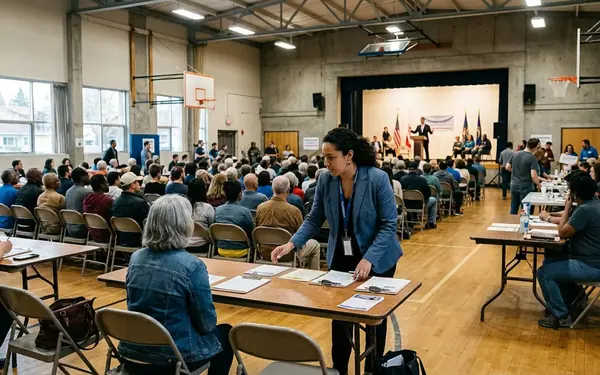
At a recent congressional candidate forum, with the time hovering around 8:35 p.m., a resident stepped to the microphone to ask how the candidates would pursue federal mitigation money for a flood-prone road crossing. The exchange yielded specific policy positions and local commitments. The next morning's article leads with endorsements and campaign strategy—omitting the infrastructure discussion entirely. Citizens can improve the information available to journalists without trying to control editorial decisions.
Thoughtful outreach may improve the information available for coverage, but it provides no guarantee of publication, favorable wording, candidate agreement, or placement before Election Day. This reality requires a disciplined approach to media engagement. For a manageable first contact, reduce the concern to one development, one affected place, two or three supporting records, and one or two firsthand sources. Five ethical routes exist for contributing facts, context, firsthand observations, and clearly labeled opinions during election season.
Match the Community Concern to the Right Newsroom Channel
Start by defining the requested editorial action. Classify the same Texas election concern by the editorial action being requested, rather than by how strongly the resident feels about it. A newly posted agenda item, government filing, candidate statement, or observable consequence points toward a news reporter. A resident's judgment about what voters should consider belongs in a letter to the editor. A developed argument requiring more room goes to an opinion editor. A provably wrong date, quotation, vote, location, or office requires a correction request.
Directing Your Civic Feedback
A compact channel comparison clarifies the purpose and gatekeeper for each route:
- Reporter pitch: Flag a timely, verifiable development using a primary record and reachable local sources. The gatekeeper is a beat reporter or assigning editor.
- Letter to the editor: Express personal civic judgment supported by an accurate local example and disclosed affiliation. The gatekeeper is the letters or opinion editor.
- Longer opinion submission: Develop a sustained public argument using sourced claims and author qualifications. The gatekeeper is the opinion editor.
- Correction request: Repair a checkable error using the exact passage and authoritative documentation. The gatekeeper is the corrections desk, an editor, or a published response form.
Review at least the outlet's five most recent relevant stories or the preceding 14 days of coverage, whichever produces the smaller useful set. This identifies the active reporter and prevents pitching an issue the newsroom addressed yesterday. Check submission rules again on the day of contact. Election letters often have a separate cutoff from ordinary letters. Newsroom titles, opinion workflows, correction forms, residency rules, and election deadlines differ by publication, so the outlet's current posted instructions control.
Give Reporters a Verifiable Local Lead
Build the pitch in the order a reporter needs to test it. Identify what changed, explain why the timing matters, name the Texas community affected, link or attach the underlying record, and list people with direct knowledge. Label confirmed material separately from interpretation. A campaign role, party position, paid relationship, or leadership post is disclosed near the signature because it affects the evaluation of the tip.

A concise subject line uses roughly 8 to 14 words naming the place, issue, and development, such as: "North Texas crossing added to Tuesday flood-mitigation agenda." Keep the opening pitch to 120 to 180 words, followed by two or three document links and source contact details.
A slogan such as "Candidate ignores infrastructure" supplies a conclusion. A usable lead identifies the dated meeting agenda, the candidate's recorded statement, the road crossing involved, and residents who can describe closures firsthand. Mark statements as "confirmed by the filing," "observed personally," or "my interpretation" when those categories might otherwise blur together.
Write a Letter an Editor Can Evaluate Quickly
Choose one election-related concern and one requested civic response. Draft the letter in four moves. State the issue, give a concrete local example, explain the consequence for voters, and ask for a defined action such as attending a forum, reviewing a public record, or asking every candidate the same policy question. Verification then proceeds claim by claim. Compare names with the ballot or official roster, check dates against the calendar, and confirm quotations against the recording.
Reviewing High-Risk Letter Details
Before submission, read the draft once solely for six high-risk details: candidate name, office sought, election date, quoted words, ballot terminology, and description of the policy at issue. The submission checklist requires verifying several publication-specific rules:
- Current word limit and exclusivity rules.
- Full name, contact information, and city or residency requirement.
- Campaign, party, or organizational disclosure.
- Identity-verification method and election cutoff dates.
- The outlet's stated right to edit for length or clarity.
If the publication gives a maximum length, finish 10 to 25 words below it so a corrected title, place name, or disclosure does not push the submission over the limit.
Be a Clear, Careful Source When a Journalist Calls
Before returning a journalist's call, prepare a short chronology, open the strongest supporting record, and write one sentence describing the local effect personally observed. During the interview, identify the basis for each answer. Distinguish what was seen or heard firsthand, what a document establishes, what is inferred, and what is personal opinion. Answer the question asked, pause when memory is uncertain, and offer to verify a detail rather than guessing.
A preparation sheet has four entries: a three-to-five-event chronology, one or two primary documents, a two-sentence firsthand account, and contact information for up to three additional relevant sources. Use explicit boundaries such as "I attended the meeting," "the posted agenda states," "I infer," and "in my opinion" rather than presenting all four as equivalent knowledge. If a date, amount, or quotation cannot be confirmed during the call, agree on a specific return time later that day and send the source record with the correction or confirmation.
Request a Precise Correction Without Escalating the Error
First test whether the disputed material can be resolved against evidence. A wrong meeting date, misidentified office, inaccurate quotation, or incorrect vote count is checkable. An omitted argument, skeptical tone, or unfavorable interpretation ordinarily falls outside a factual correction. Recommend a calm, private first contact through the outlet's stated correction channel rather than beginning with public accusations about motives.
Use a five-part request: article title and date, exact disputed passage, corrected fact, primary document with page or timestamp reference, and requested replacement language. Quote only the sentence or clause containing the error rather than reposting the full inaccurate claim on social channels. Save the sent message, attachments, submission confirmation, reply, and any amended version of the article in one dated folder. Consult the outlet's published escalation path before sending another request.
Put One Local Election Issue on the Record This Week
For a one-week action plan, select one concrete Texas concern on day one. Collect a small evidence packet on days one and two. Identify the relevant outlet and current contact on day three. Choose the channel by the requested result on day four. A newly scheduled vote or filing becomes a reporter pitch. A resident's judgment about candidate priorities becomes a letter. Direct experience with the issue supports an interview. A provable mistake becomes a correction request.
Assembling the Evidence Packet
A small evidence packet can contain three to five items:
- A public agenda or government filing.
- The relevant page or timestamp highlighting the issue.
- One dated photograph or observation log.
- Contact details for one or two firsthand sources.
Calendar fields track the outlet, contact or form, channel, submission cutoff, date sent, confirmation received, one follow-up date, and final status. Recommend tracking submission dates and follow-up status in a simple calendar while avoiding repeated messages, identical group submissions, or pressure campaigns directed at individual journalists. Credibility comes from accurate details, transparent campaign or organizational interests, requests matched to the editorial channel, and acceptance that the newsroom decides whether and how to publish. Accurate evidence and a polished letter cannot recover an outlet-specific election-letter deadline after it has passed.