Opening Note From the Trail
Jan McDowell’s recent campaign activity in North Texas has centered on voter conversations, volunteer outreach, and issue-focused listening across local communities.
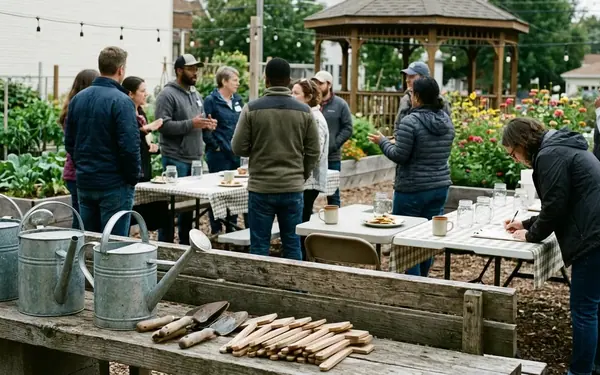
I am treating this update as a campaign-trail note, not as a prepared speech. The purpose is to report what residents are raising in everyday settings: at community tables, in neighborhood conversations, and during volunteer contact where people ask direct questions about public service, representation, and how government decisions affect household life.
That distinction matters. A campaign can sound tidy from a podium, but voters rarely speak in talking points. They bring a property-tax concern, a question about a city service, a worry about affordability, or a practical question about voting. Those comments deserve to be handled in plain language.
Critical Insight: I kept the opening summary tied to verifiable campaign notes, public schedule references, volunteer logs, and direct field observation before describing the activity as recent.
How I Framed This Update
For this note, I worked from the Sept. 3 through Sept. 9 observation window and used the campaign record as the guardrail. If a detail could not be tied to field notes or direct activity, I either left it out or described it more carefully. That process keeps the article useful to voters who want a clear account rather than a polished campaign claim.
What North Texas Voters Are Bringing Up
The recurring themes in reviewed field notes were public spending, government accountability, affordability, local services, and confidence in representation. I would not describe those as the full opinion of North Texas voters. I would describe them as the issues that kept coming back in campaign-trail conversations.
At a community table, the question might start with a narrow concern: why a public cost increased, whether a service is keeping up, or how an elected official explains a vote. At a neighborhood door, the same issue may sound more personal: a resident wants to know whether government is paying attention before decisions are already made.
The reviewed notes show a pattern that is familiar on local campaigns: voters often begin with one practical frustration and then connect it to a larger concern about trust. A discussion about affordability can become a discussion about public priorities. A question about local services can become a question about whether residents feel heard.
Separating Repeated Concerns From One-Off Comments
I grouped an issue as recurring only when it appeared often enough in the reviewed notes to justify that label. The working threshold was appearance in about 40% of reviewed field notes or in seven separately logged conversations. That is not a polling standard, but it is a useful campaign-communications check against overreading a single strong comment.
This is where message discipline has a civic purpose. If one resident raises a serious concern, it should be heard. If several residents raise the same concern in separate settings, it should be tracked. Those are different claims, and they should not be blurred.
Risk Factor: Saying that all North Texas voters are demanding a specific reform would overstate the evidence. The safer and more accurate statement is that several fiscal and accountability concerns came up repeatedly in campaign-trail conversations.
Fiscal Accountability Remains a Central Theme
Fiscal accountability connects many of the conversations described above because it gives voters a plain way to ask whether public dollars are being explained clearly, spent responsibly, and tied to public benefit.
Jan McDowell’s position is best stated without decoration: voters deserve clear discussion of public money. They should be able to understand what a public dollar is meant to accomplish, what trade-offs are involved, and how elected officials will answer for the result.
I kept this section general by design. The source-check standard for fiscal-accountability language was to rely primarily on civic standards, public-records principles, and documented campaign language rather than unverified anecdotal claims about a specific budget, agency, or opponent. That protects the reader from speculation and protects the campaign from making claims it cannot support.
What Voters Are Really Asking
In practice, the fiscal question often sounds simple: “Where is the money going?” Behind that is a deeper concern about whether decisions are being made in public view and whether the benefit is clear enough for residents to evaluate.
Some voters ask for more detail. Others ask for a simpler explanation. Both requests point in the same direction: public spending should be understandable to the people who pay for it.
My own take is that fiscal accountability works best as a standard, not a slogan. A standard can be applied to budgets, services, contracts, and public priorities. A slogan usually disappears after the applause.
Volunteers, Conversations, and Voter Participation
Volunteers are often the first people to hear what is on a voter’s mind. They staff event tables, make calls, help with neighborhood contact, and share basic information about how residents can participate.
The activity notes suggest that the most useful volunteer outreach is usually the most practical. A volunteer does not need to turn every conversation into a long policy exchange. Sometimes the most valuable action is listening carefully, recording the issue accurately, and pointing a resident to official voting information when the question is about registration, dates, identification, or polling requirements.
Practical Participation Check
Residents should verify their voter registration status, election dates, and voting requirements through official state or county election resources. For statewide guidance, the clearest starting point is Texas official voter information.
I prefer that approach because voter-process guidance should come from election authorities, not campaign interpretation. Campaigns can encourage participation, but official resources should carry the details.
Recommendation: Before relying on a campaign flyer, social post, or forwarded message about voting logistics, check the official source and confirm the information against your own address and eligibility status.
What Volunteers Can Do Well
Good volunteer conversations are specific and respectful. Ask what issue brought the voter into the conversation. Listen for whether the concern is about cost, service quality, accountability, or access to information. Then record the concern without stretching it into a broader claim.
That simple process helps the campaign learn while keeping faith with the person who took time to speak.
Scope of These Campaign Notes
These notes should be treated as campaign-trail observations, not a representative sample of all North Texas voters.
That qualifier is not a formality. Most campaign conversations are non-random. People who stop at an event table, answer a door, attend a gathering, or speak with a volunteer are participating in a particular setting. Their comments are valuable, but they do not carry the same weight as a scientific survey.
The limitation review for this article pointed in the same direction: when voter references come from non-random campaign interactions, the article should avoid survey-style conclusions. That is why the language here says “came up repeatedly” rather than “voters everywhere believe.”
Why the Scope May Change
Issue emphasis may shift as Jan McDowell meets more residents, attends additional campaign events, and hears from people in different parts of North Texas. A week with more neighborhood contact may surface one set of concerns. A week with more community meetings may surface another.

That does not make the notes unreliable. It means they should be read for what they are: a dated account of what the campaign heard in selected settings during a defined period.
This is also why I avoid turning one sharp conversation into a sweeping claim. A neighborhood-door exchange can illuminate a real concern, but it should not be used to speak for every voter in Texas.
Takeaways From the Week
Three takeaways stand out from this week’s campaign notes.
- Voters are engaged. Residents are asking direct questions about services, affordability, representation, and how decisions are explained.
- Fiscal accountability is recurring. The subject came up across multiple campaign-trail conversations, often as part of a broader concern about trust and public benefit.
- Participation matters. Voters who check their registration, confirm deadlines, and take part in local conversations help strengthen the civic process.
The closing point is straightforward: continued outreach will matter because the campaign is still gathering questions, concerns, and local perspective from North Texas residents.
What I Will Watch Next
In the next round of notes, I will look for whether the same issue clusters continue to appear or whether new concerns move to the front. I will also watch how often voters connect fiscal accountability to other subjects, such as affordability or confidence in representation.
For now, the most responsible summary is also the simplest one: people are paying attention, they want public dollars discussed clearly, and they are looking for representation that treats their questions as part of the work.