
The Campaign Question Money Cannot Answer
“How can a Texas campaign compete when the other side can spend far more?”
That question comes up often on the campaign trail, especially when one campaign can fill mailboxes, purchase repeated advertising, and retain more professional support. Money expands distribution. It places a message in front of voters and gives a campaign the tools to operate at scale. Yet distribution alone cannot create trust, supply neighborhood knowledge, or persuade a resident that the campaign will listen after the conversation ends.
Three functions tend to get blended together: purchasing reach, carrying a credible message, and earning a response. Campaign funds handle the first. Trusted residents often carry the second. Disciplined follow-up determines whether the third becomes useful civic engagement.
A campaign-work window of six to ten weeks illustrates the distinction. A single mail piece can introduce a position on fiscal accountability. Repeated local contact can reveal whether voters understand that position, which details they question, and whether the language reflects their experience in North Texas communities.
Grassroots organizing works best under clear conditions. Volunteers need accurate message points, meaningful ties to the people they contact, and a dependable process for questions they cannot answer at the door. Enthusiasm helps people begin. Structure helps them finish.
What Money Buys—and What It Often Misses
Campaign spending and grassroots organizing perform different jobs. A useful comparison starts with campaign functions rather than a contest over which resource matters more.
How funding and person-to-person organizing support common campaign functions| Campaign function | What funding can provide | What grassroots contact adds |
|---|---|---|
| Advertising and mail | Broad, repeated message distribution | Questions that show how residents interpret the message |
| Professional services | Specialized production, planning, compliance, and communication support | Local context that helps those services address actual concerns |
| Travel and event materials | Transportation, signs, printed information, and meeting logistics | Personal accountability before, during, and after an event |
| Organizing tools | Contact systems, lists, routing, and volunteer coordination | Corrections and feedback from people using those tools in the field |
| Person-to-person follow-up | Staff time and systems for managing incoming requests | Repeated contact grounded in a prior conversation |
A paid message functions as one-way communication unless it offers a monitored response channel. When voters do reply, the campaign needs an operating standard: acknowledge the question within one business day and provide a substantive answer within two to three business days.
That response time matters. A resident who asks about a Texas priority should know that someone received the question, assigned it, and will return with an answer. Spending can build the channel. Follow-through gives the channel public value.
The Front-Porch Feedback Loop
I use a simple test for a useful voter conversation: did the campaign learn something, answer responsibly, and make the next action clear? A polished script that produces none of those outcomes has limited field value.
A doorstep exchange can be planned for three to eight minutes. Allow roughly one minute for the opening, two to five minutes for listening and response, and up to two minutes to confirm follow-up or a next action.
- Ask an open question. Invite the resident to name the issue affecting their household or neighborhood.
- Identify the priority. Listen for the concern beneath the first answer, including confusion about a public statement or policy claim.
- Respond plainly. Use approved language and acknowledge uncertainty when the campaign needs to verify a detail.
- Record appropriate information. Log the issue category, unresolved question, permitted contact method, and any no-contact request.
- Make a specific next ask. Offer a defined action such as attending an event, receiving an answer, or helping with voter-participation reminders.
Unresolved questions should reach the responsible campaign contact within 12 to 24 hours. Asking volunteers to improvise creates conflicting answers and weakens message discipline.
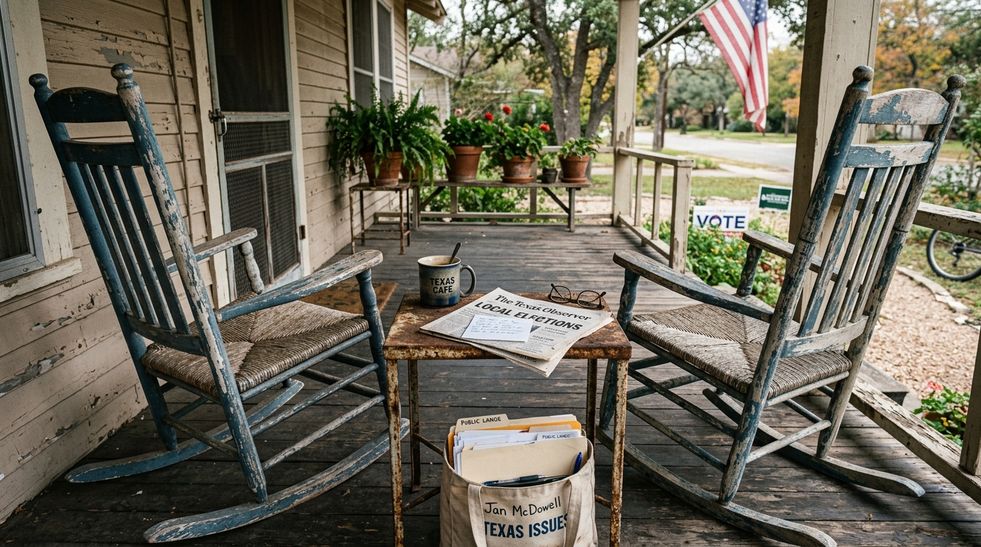
Listen for Friction
When several residents pause at the same phrase, the campaign has found a communication problem worth fixing. The immediate task is to clarify the language, update the approved response, and return to anyone who requested an answer.
Face-to-face contact surfaces overlooked local concerns and objections that prepared talking points may miss. These campaign-trail observations are practical lessons from direct civic engagement; they do not replace measured election research or establish a universal effect.
From Volunteers to Neighborhood Capacity
A campaign can recruit motivated volunteers and still fail when routes contain outdated addresses, residents receive conflicting answers, or promised follow-up remains unassigned.
The solution is to reduce ambiguity at every handoff. A workable first shift begins with a 12- to 20-minute orientation, followed by a 45- to 90-minute paired assignment. The debrief should take eight to 12 minutes and focus on safety, unclear claims, resident questions, and list corrections.
A Repeatable Field Rhythm
- Give each volunteer a short script and approved message points.
- Name one coordinator who can resolve questions during the shift.
- Pair a new volunteer with someone familiar with the process.
- Assign a bounded route or defined contact list and a clear stop time.
- Provide an escalation channel for questions outside the script.
- Hold a quick debrief and assign every follow-up item.
- Offer the next assignment before the volunteer’s momentum fades.
Process no-contact requests before the next outreach shift and no later than 24 hours. This protects residents’ stated preferences and prevents avoidable repeat contact.
Capacity also grows when roles fit people’s comfort levels. Some volunteers thrive while canvassing or making phone calls. Others contribute through event setup, volunteer check-ins, issue research, list corrections, or voter-participation reminders. Each role should produce a visible result and connect to the wider field plan.
Grassroots Does Not Mean Resource-Free
Basic communications, transportation, accessible meeting space, printed materials, compliance support, and dependable organizing systems all cost money. Those expenses enable volunteers to use their time well.
Run a field-readiness check two to four hours before deployment. Confirm list freshness, route ownership, accessibility information, materials, transportation, contact permissions, and the person responsible for unresolved questions. A missing route owner or stale list can waste an entire shift before the first conversation begins.
Fund the Contact
Evaluate spending by the human contact it supports. A maintained list, an accessible event location, or a reliable follow-up system strengthens participation because each removes a practical barrier between the campaign and the voter.
Review unanswered resident requests at the end of every shift and again on the next business morning. Reassign any item without an owner before more outreach begins.
The same field plan will behave differently across a walkable urban block, a controlled-access apartment property, and a rural Texas route. Travel time, daylight, language access, and distance between homes reshape the assignment. Outreach methods, data handling, property access, and election-related compliance duties also vary by jurisdiction, campaign type, and contact channel, so the campaign’s current legal and privacy procedures must govern the workflow.
Resources should enable dependable human contact. A large expenditure may increase visibility, while public support becomes visible through participation, conversation, and accountable follow-up.
Try the One-Block Organizing Test
Choose one bounded precinct segment or residential block. Keep the area small enough to observe the full contact-and-follow-up cycle without losing questions between teams.
Assign three to five volunteers for a 75- to 120-minute test covering roughly 20 to 40 attempted household contacts. Keep pairs within the same bounded area. Brief them on the opening question, approved claims, safety expectations, contact permissions, and the process for unresolved issues.
Review the Whole Cycle
- Did volunteers complete the agreed route or list?
- Did residents receive accurate answers or a clear follow-up commitment?
- Which opening questions produced genuine conversation?
- Which claims required clarification?
- Did repeated concerns reach the person responsible for issue messaging?
- Does every participant know the next action?
Hold a 15- to 25-minute review immediately after the shift. Inspect the follow-up log again within 24 to 48 hours. Success means completion and closure rather than a predetermined number of supporters.
Late in the afternoon on a North Texas block, a paired team returns to the route map and circles one unanswered question about fiscal accountability. The coordinator assigns the response before the volunteers pack away their materials. By the next contact, the resident receives the promised answer, and the team begins the next shift with clearer language than it had at the first door.