
Why Texas Appoints Volunteer Deputy Registrars by County
The Texas Election Code places appointment authority with county voter registrars, who appoint volunteer deputy registrars to assist with voter registration. That statutory structure determines how fieldwork operates today: a deputy’s authority comes from the county appointment. Civic-group membership or participation in a registration event does not confer that authority.
I would judge a registration table by the application’s complete journey: the correct county, private completion, careful review, a receipt, secure custody, and timely hand delivery. A productive conversation begins that work; delivery to the receiving registrar completes the deputy’s handoff.
Prepare in that order. Establish your eligibility, complete the county’s training and appointment process, then organize application review, receipts, and delivery. Each checkpoint answers a different question: whether you may serve, whether your appointment is effective, and whether you can carry accepted applications through to the proper office.
Check Your Eligibility Before Scheduling Training
Resolve appointment eligibility before reserving a training session. Use this self-check, keeping each legal requirement separate:
- Age, citizenship, and residence: You must be at least 18 years old, a U.S. citizen, and a Texas resident. Being registered to vote is not itself required for appointment.
- Legal capacity: The restriction concerns a final judgment by a court exercising probate jurisdiction determining that you are totally mentally incapacitated, or partially mentally incapacitated without the right to vote.
- Final felony conviction: The eligibility provisions recognize full discharge of the sentence, including incarceration, parole or supervision, or completion of court-ordered probation. They also recognize a pardon or other release from the resulting disability to vote.
- Separate conviction restrictions: Check the restriction concerning conviction for failing to deliver a voter registration application and the restriction concerning final conviction for identity theft under Texas Penal Code Section 32.51. Keep these separate from the felony restoration provisions.
Deputy eligibility and voter-registration eligibility have different age thresholds. A person may apply to register at 17 years and 10 months and must be 18 by election day to vote; a deputy must already meet the appointment age requirement.
Take an unresolved eligibility question to the county voter registrar before committing to training.
Find County Training and Confirm Your Appointment
Start with an official county source or the state’s county election-office directory to identify the voter registrar. Then locate that county’s current Volunteer Deputy Registrar instructions. Check training dates, enrollment procedures, available formats, any assessment, and the steps required to receive appointment documentation.
Training completion and effective appointment are separate checkpoints. Before accepting applications, confirm that your appointment is effective and check its expiration. An appointment ordinarily expires on December 31 of the next even-numbered year; verify the date on your county documentation.
A county appointment does not authorize accepting applications as a deputy for residents throughout Texas, so arrange additional county appointments or direct those residents to an appropriate registration channel.
- Working within one appointed county: Prepare its application materials, receipt supplies, and receiving-office instructions.
- Expecting residents from several counties: Prepare a coverage sheet identifying an appropriately appointed deputy and receiving office for each county being served.
Keep the physical delivery address, intake hours, office telephone number, local handoff instructions, and appointment dates with your documents. Confirm the receiving counter’s hours; the building’s general opening hours may describe a different schedule.
Review Each Application and Issue the Required Receipt
Begin with the applicant’s county of residence. Provide the appropriate application and a place to complete it privately. When the applicant is ready, review the required entries together while questions can still be answered.
I favor a consistent review sequence because it makes an overlooked field easier to catch without turning the conversation into an interrogation.
- Check the core entries. Review the name, residence information, date of birth, applicable citizenship and age responses, identifying-number response, and required signature and date fields.
- Follow the identifying-number sequence. The form calls for a Texas driver license or personal identification number if issued; otherwise, the last four digits of the Social Security number if issued; otherwise, the indication that neither has been issued.
- Resolve omissions with the applicant. Point to the unanswered field and let the applicant supply the answer. Leave citizenship declarations and identifying information to the applicant. Obtain the required signature or follow the properly completed assistance procedure.
- Complete the receipt. Use the county-provided or approved format. Fill in the applicant identification, acceptance date, and deputy identification and signature fields it requires. Give the applicant their portion and retain yours.
Your review checks completeness. The registrar makes the registration eligibility determination. Explain that distinction clearly when handing over the receipt, and make no promise of approval.
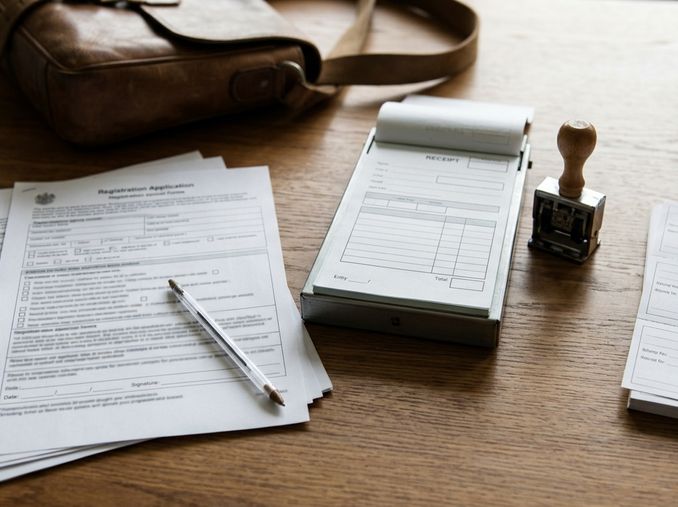
Place accepted applications and retained receipts in a protected workflow organized by receiving county and acceptance date. Use folder dividers or envelopes. Keep identifying numbers out of event spreadsheets and leave applications unphotographed.
Plan Hand Delivery Around the Five-Day Deadline
Under the Texas Election Code delivery requirements, volunteer deputy registrars must hand-deliver accepted applications within the statutory five-day period, subject to the calendar adjustments and election-related requirements in Section 13.042. Ordinarily, delivery to the registrar is due by 5 p.m. on the fifth day after submission to the deputy. Mailing the applications does not satisfy that hand-delivery duty.
The clock begins when the applicant submits the application to you. An event’s closing time or the end of a volunteer shift does not reset it.
Put the Election Calendar Beside the Delivery Log
If the last day for timely delivery falls on a Saturday, Sunday, or legal state or national holiday, the statute permits delivery on the next regular business day. Outside the accelerated election period, an application accepted Monday ordinarily reaches its fifth day on Saturday; the weekend provision moves delivery to the next regular business day. Planning a Friday handoff avoids relying on that extension.
The election-adjacent rule needs a separate calendar check. For applications submitted after the 34th day before an election and before the last day to submit a timely registration application for that election, delivery is due by 5 p.m. on the day after that registration cutoff. Enter the county’s actual election dates into the plan, and arrange prompt delivery for cutoff-day collections as well.
Keep the applicant’s registration cutoff separate from the deputy’s delivery deadline. A timely deputy handoff alone does not establish eligibility to vote in a particular election.
Assign a Person to Each Handoff
Use a scheduling log with the acceptance date, receiving county, applicable due date and time, planned delivery date, assigned delivery person, and completed-handoff confirmation. Keep applicant names, birth dates, and identifying numbers out of a broadly shared log.
An appropriately appointed deputy for the same county may assist with personal delivery. The accepting deputy retains responsibility for timely delivery when another deputy carries the paperwork.
Set Up a Registration Table That Keeps Applications Moving
Pack around the application’s route through the table. Outreach supplies belong alongside a complete custody and delivery plan.
Pack for County Intake
- Current appointment documentation for every county you will serve.
- County-appropriate applications and required receipt materials.
- Pens, clipboards, and a secure folder with county and acceptance-date dividers.
- A county reference sheet with receiving addresses, intake hours, telephone numbers, and handoff instructions.
- A delivery schedule naming the custodian, planned delivery person, backup, and next available intake period.
Arrange distinct areas for blank forms and instructions, private completion and review, and secured accepted applications. Keep completed forms away from public sign-up sheets, campaign materials, and unattended clipboards. A campaign contact list serves a different purpose from an application delivery log.
Open with a neutral routing question: “Which county do you live in, and are you registering for the first time or updating your registration?” That answer helps connect the applicant with the correct materials and deputy.
A single-county event needs one coordinated county workflow. An event drawing residents from several counties requires matching appointment coverage, separated materials, and distinct delivery arrangements. I would settle those assignments before accepting the first application, while there is still time to adjust the setup.
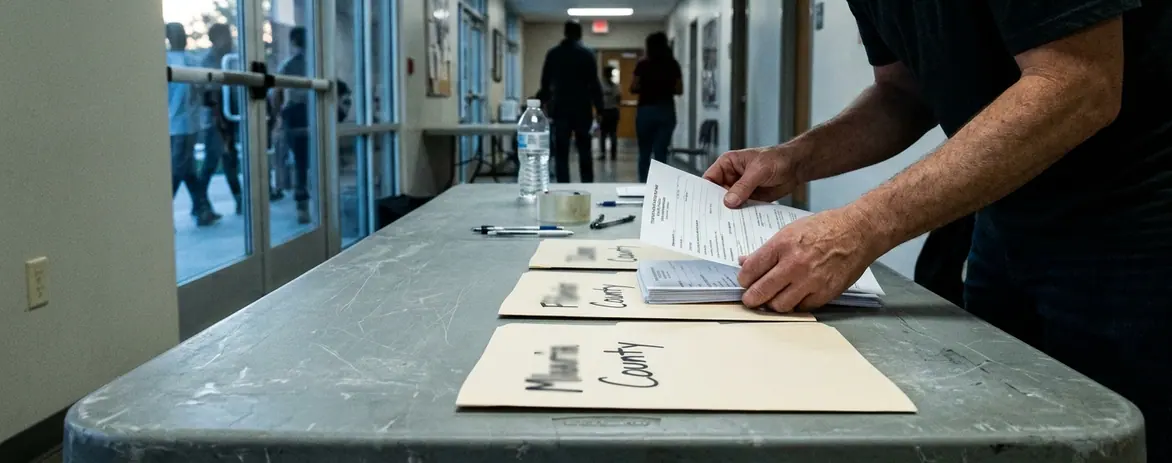
Close the Table With Every Application Assigned a Delivery
Consider this hypothetical closing: the table holds accepted applications for several counties, one receiving office is nearing closure, and the planned delivery person becomes unavailable.
First, sort the accepted applications by receiving county and acceptance date. Reconcile each group with its retained receipts, then secure the paperwork. Check each packet’s actual deadline against the receiving office’s intake hours and the travel time needed to reach it.
For the office nearing closure, use another receiving day only if it remains within the applicable legal delivery period. Find an appropriately appointed deputy for that county if the planned courier cannot make the trip, while keeping the accepting deputy’s responsibility clear. Assign the other county packets their own destinations and planned visits.
Before leaving, put each delivery on the calendar with its responsible deputy and due time. Record completed handoffs in the scheduling log, and retain receipt records securely according to county instructions.
The applicant’s receipt marks entry into the deputy’s custody—the delivery clock keeps running after the table folds.