
From a North Texas Water Trench to the Payment Ledger
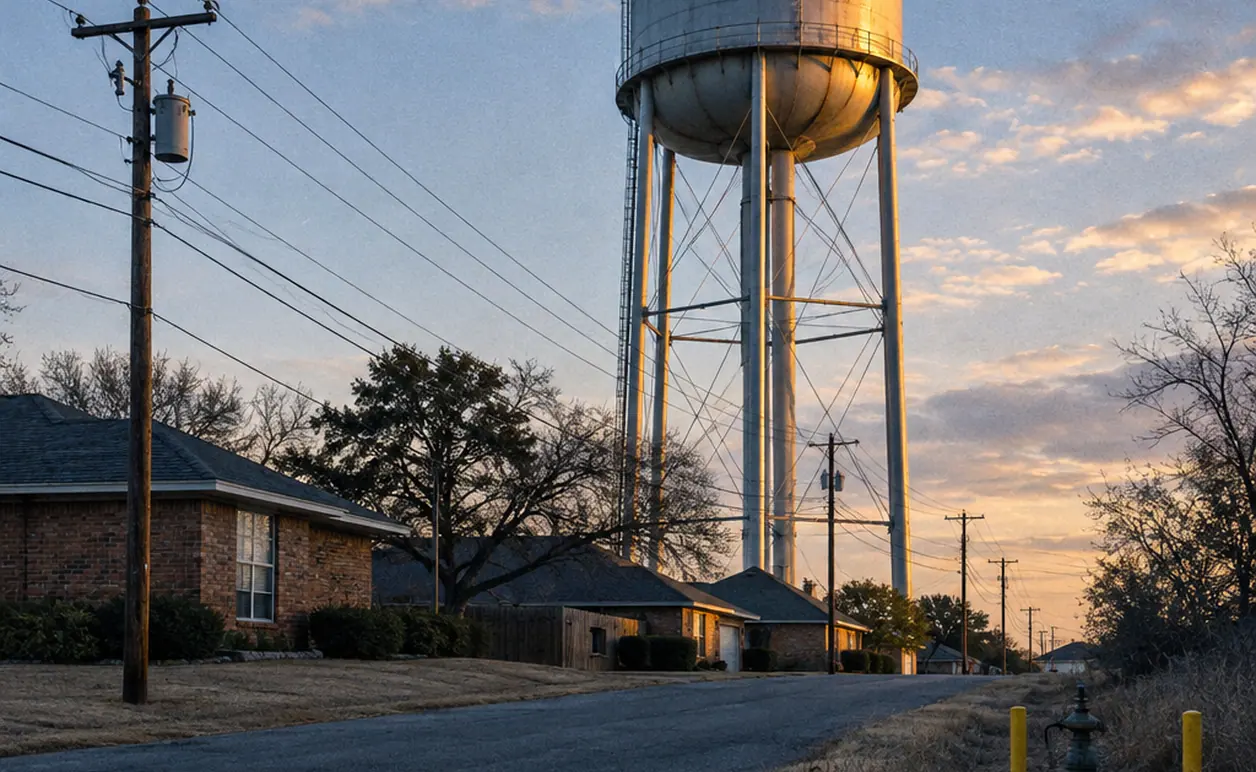
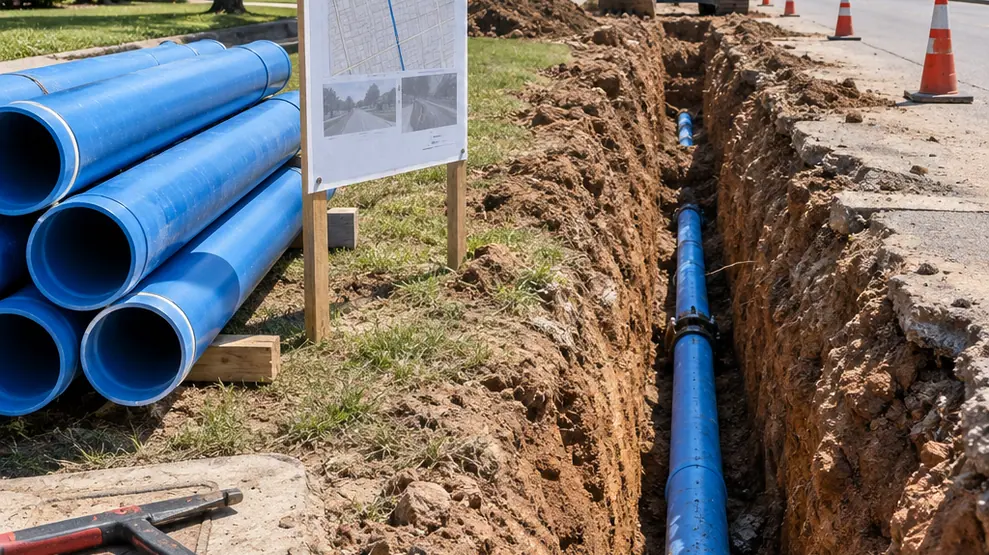
An open water-main trench on a North Texas residential street, replacement pipe stacked alongside it, and a municipal project notice nearby give residents a starting point for following the money behind the work.
Record the project name, municipal department, and construction limits. Use those details to locate the municipal project record, then follow it to the executed award agreement, construction contract, and payment ledger.
The central question is straightforward: how can residents trace federal water-infrastructure funding from an announced award to completed, paid-for work?
I start with three separate outcomes: a dated construction milestone, a documented payment, and an acceptance or commissioning record showing readiness for use. Together, they give fiscal accountability a practical meaning. Spending records establish costs; construction and acceptance records establish what the community received.
Map Each Funding Handoff Before Comparing Balances
Read the agreement’s recipient, funding-source, disbursement, and approval provisions before drawing the funding route. A direct award connects the federal awarding agency to the municipal recipient and then to contractor payments. A pass-through arrangement adds the administering entity named in the agreement.
Keep financing sources separate. A grant provides nonrepayable assistance subject to its terms. A loan carries repayment obligations. A local match is the recipient’s required contribution.
- Awarded: generally, assistance approved in an award.
- Obligated: a binding commitment at the funding level specified in the record.
- Reimbursed: eligible costs repaid to the recipient.
- Spent: an amount that must follow the reporting entity’s definition.
Use the governing agreement’s terminology when labeling your notes. Keep separate dates for the contractor invoice, municipal payment, reimbursement submission, and reimbursement receipt. A municipality can pay for installed pipe before receiving reimbursement. Those dates describe different stages of the same transaction.
Reconcile Authorized Pipe Work With Actual Payments
A reconciliation begins with the authorized budget and contract value, then traces individual payments through approved work and accounting entries. Keep federal assistance, local financing, the total project budget, and contractor payments in separate columns.
Gather the Documents Behind Each Payment
- Executed award agreement and amendments.
- Approved project budget and procurement record.
- Executed construction contract and approved change orders.
- Invoices or payment applications, payment ledger, and progress reports.
Calculate the current contract value from the original value plus approved change orders, treating deductions separately from additions. For each selected payment, record the contract pay-item number, invoice identifier, service period, approved amount, retainage withheld, payment date, and ledger reference.
A cumulative payment application requires particular care. Work completed to date differs from the current amount due. Account for prior payments, retainage, and documented adjustments before matching that amount to a ledger transaction.
If an approved pipe-installation payment application has no reconciled payment entry, request the missing allocation, adjustment, credit, or transaction detail. An unexplained difference identifies the next record to obtain.
Put Two Water Projects on the Same Milestone
Compare projects at a shared point, such as the first approved construction payment or substantial completion. A water-main replacement and a treatment-system project can have different scopes, financing arrangements, and construction sequences. Establish those differences before comparing delivery.
Before naming two municipal cases, assemble each project’s executed funding agreement, procurement record, contract, dated progress documentation, and payment detail. Use this worksheet to organize the comparison:
| Comparison field | Entry required for each project |
|---|---|
| Project purpose | Authorized work and construction limits |
| Funding instrument | Grant, loan, and local contribution identified separately |
| Award date | Date shown in the executed funding record |
| Contract date | Execution date of the construction contract |
| Shared milestone | Same construction stage, supported by a dated record |
| Payment status | Approved, paid, or awaiting an identified action |
| Schedule revision | Documented reason and affected activity |
Attach a document title, date, and page or agenda item to each factual entry. Then distinguish active construction costs, completed work awaiting payment, and municipal payments awaiting reimbursement.
Find the Approval Between Completed Work and Payment
Locate the last completed handoff and the next required action. That sequence helps direct a question to municipal project staff, finance personnel, an administering intermediary, or the federal awarding agency.
For an invoice, follow the submission date, reviewer comments, correction request, corrected submission, approval, and payment entry. For a change order, follow the contractor’s request through the engineering recommendation, required municipal authorization, and execution.
Keep engineering redesign, unavailable site access, pipe-delivery problems, and field construction issues separate from procurement review or invoice processing. Each calls for a different response.
Delays can create extended administration, financing costs, or contractor remobilization costs. Connect any project-specific cost claim to dated invoices, amendments, or other supporting records. For public discussion of Texas priorities, a useful question identifies the outstanding approval, the office responsible, and the action needed to move the work forward.
Request the Records That Join Funding to Construction
A focused request gives municipal staff searchable fields and gives residents a manageable transaction trail. Insert the municipality, project name, award identifier, and a defined date range into this template:
Please provide existing electronic records for [municipality], [project name], award identifier [identifier]. Please include the executed award agreement and amendments, executed construction contract, and approved change orders, including agreements executed before the transaction period below.
For [start date] through [end date], please provide the project payment ledger, reimbursement submissions and status records, and the milestone schedule current at the end of that period.
For ledger records, please provide existing fields showing transaction date, payee, amount, project identifier, invoice reference, and payment reference, preferably in the electronic format maintained by the municipality.
Keep executed agreements within scope even when their signing dates precede the transaction period. After reviewing the response, narrow any follow-up to a particular invoice, approval, payment entry, or reimbursement submission. That makes voter participation more useful to North Texas communities: the question points to an identifiable action.
Follow One Pipe-Installation Invoice Into the Council Meeting
Consider how a single water-main replacement payment application moves from field work to the council packet:
- Identify the funding route. The municipal project record lists the Oak Street Water-Main Replacement under award identifier TX-SRF-0412, naming the city as recipient and the state water board as administering intermediary in the executed agreement.
- Check the authorized work. Pay Application #4 bills 800 linear feet of 8-inch PVC pipe under pay item 302-A at $110 per linear foot ($88,000), matching the unit price and quantity authorized in the executed construction contract.
- Trace the amount due. After subtracting 5% retainage ($4,400), the approved net amount due is $83,600. The engineer signed the approval on May 12, but the municipal payment ledger through June 15 shows no matching payment reference or state reimbursement submission.
- Check construction progress. The inspector’s May daily logs confirm all 800 feet of pipe were installed and pressure-tested in the trench, rather than sitting on site as stored materials.
Because the $83,600 approved net amount has no reconciled municipal payment entry 34 days after engineering sign-off, the gap is ready for public comment at the council meeting: “Pay Application #4 for the Oak Street project was approved by engineering on May 12 for $83,600, but does not appear on the June 15 ledger—which finance or intermediary approval is pending, and when is the disbursement scheduled?”