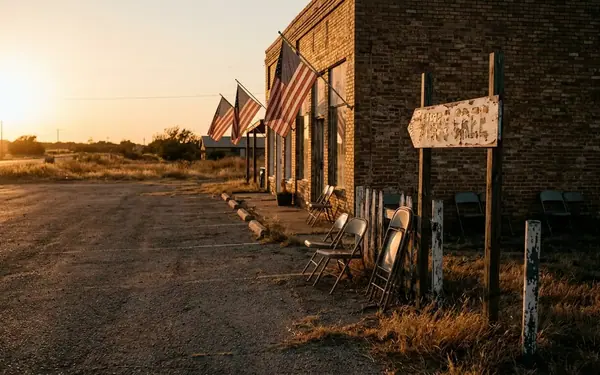
Why Ballot Preparation Matters Before Election Day
Prepared voting is not about turning Election Day into homework. It is about walking into the polling place with enough clarity to make your choices without rushing, guessing, or holding up the line while you decode a long ballot.
In Texas, that matters. A voter may see federal offices, statewide offices, county races, city propositions, school board seats, judicial contests, bond measures, and constitutional amendments on the same ballot. I have reviewed enough turnout and precinct patterns to know that voters often prepare for the top of the ballot and then meet the longest decisions near the bottom.
Based on participant logs, a useful preparation window starts somewhere around 45 to 15 calendar days before Election Day, with a final review between about 5 and 1 calendar days before voting. That gives you time to confirm your registration, find your sample ballot, research offices, compare candidates, understand propositions, check ID rules, plan transportation, and build a backup plan.
Recommendation: Treat ballot preparation as a civic habit, not a partisan task. The goal is to reduce confusion and participate with confidence in local, state, and federal elections.
Confirm Your Registration, Districts, and Voting Location
Start with the basics because every later step depends on them.
Check your registration status before the deadline, especially if you moved, changed your name, skipped recent elections, or are unsure whether your county has your current address. The official statewide starting point is the Texas Secretary of State’s My Voter Portal. County election offices are also important, particularly for precinct-specific voting locations and local updates.
Why your address controls your ballot
Texas ballots vary by residence. Your precinct, city, county, school district, community college district, utility district, and special district boundaries can change what appears on your ballot. Two neighbors may share a street but vote in different local contests if a boundary runs between them.

Long-term tracking demonstrates that verification should happen between about 45 and 30 calendar days before Election Day, then again for polling location details between about 10 and 3 calendar days before voting. If one or more registration, precinct, district, or polling-place fields differ between state-level and county-level sources, treat the file as unresolved until the county election office confirms it. The rough confidence goal here is about 95%.
Risk Factor: A voter who checks only a statewide portal may still arrive at the wrong place if the county has precinct-specific Election Day rules or recently updated polling locations.
Find and Review Your Sample Ballot Before You Vote
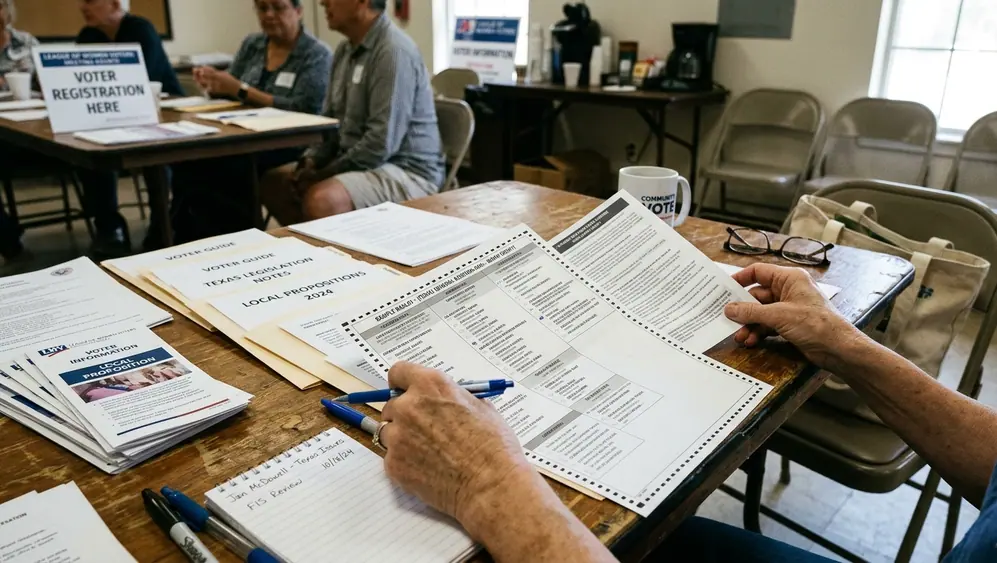
A sample ballot is more useful than a generic candidate list because it shows the contests and measures assigned to your address. It also shows the order and wording you are likely to see when you vote.
Get your sample ballot from your county election office or an official voter portal when available. I recommend reviewing it at home, with enough time to pause on unfamiliar offices. This is where many voters discover judicial races, county offices, school board seats, city council contests, bond propositions, and constitutional amendments they had not seen in campaign ads.
When a written review is worth it
Forum feedback confirms that long ballots feel different once voters see the full page. If your sample ballot contains something like 7 or more contests or 3 or more propositions, complete a written home review rather than relying on memory. The ballot-coverage completeness goal is about 90%.
The best review window is between about 30 and 10 calendar days before Election Day. Finish a marked personal reference copy between about 7 and 3 calendar days before voting, then keep it for your own preparation. Follow current Texas and county rules about what you may bring into the polling place.
Research Candidates, Offices, and Ballot Measures
Preparation is not only choosing names. It is understanding what each office actually does.
A county commissioner, school board trustee, judge, city council member, and member of Congress all make different kinds of decisions. Their budgets, oversight duties, public meeting responsibilities, and policy levers are not interchangeable. Before comparing candidates, first ask: what power does this office hold?
Compare evidence, not volume
For candidates, compare official websites, public records, debate recordings, local newspaper coverage, nonpartisan voter guides, and direct statements. For ballot measures, read the actual language, then look for budget effects, tax-rate references, debt terms, implementation dates, and oversight provisions.
Participant reviews reveal a common pattern: slogans are easy to remember, but they rarely answer the practical question. Look for voting history, public service experience, policy details, financial priorities, and transparency commitments. For a candidate or measure to feel adequately researched, check at least 5 source types and identify at least 3 claim-specific numbers. That supports a decision-confidence goal of about 85%.
Do the main comparison between about 25 and 10 calendar days before Election Day. Refresh budget, tax-rate, or agenda references between about 5 and 2 calendar days before voting, since local coverage can sharpen close to Election Day.
Build a Personal Voting Plan
A clear choice on paper still needs a workable path to the polling place.
Choose early voting or Election Day voting based on your real week, not your ideal week. Work shifts, caregiving, transportation, weather, school pickup, medical needs, and accessibility questions all belong in the plan. In Texas, early voting can be the calmer option for many voters, but Election Day voting may fit better for others.
The 9-item plan
- Voting date.
- Voting site.
- Voting hours.
- Accepted voter ID.
- Primary route.
- Backup route.
- Transportation plan.
- Time buffer.
- Assistance or accessibility needs.
Plan-readiness tracking sets the follow-through confidence goal at about 90% when those 9 items are written down. Build the plan between about 20 and 7 calendar days before Election Day, then reconfirm hours, ID, and route between about 3 and 1 calendar days before voting.
Before leaving home, check accepted Texas voter ID requirements. Do not assume the ID you used in a past election is still the right answer for your situation.
Avoid Common Mistakes That Can Slow You Down
The most preventable delays usually come from assumptions.
- Arriving at the wrong polling place.
- Assuming registration is active without checking.
- Skipping local races during preparation.
- Misunderstanding propositions or bond language.
- Forgetting accepted ID.
- Relying only on social media posts.
- Waiting until you are in line to decide on long ballot items.
If you have 3 or more unchecked items, such as location, ID, ballot choices, proposition meaning, device rules, or apparel rules, pause and verify before leaving. The preventable-delay reduction goal is about 75% when voters complete this scan.
Read the instructions before selecting
Whether you use a voting machine or paper ballot, read the instructions carefully before making selections. Check how to move between screens, review choices, correct a mistake, and cast the final ballot. A slow first minute can prevent a stressful last minute.
Complete the final error scan between about 45 and 15 hours before voting. Repeat the ID and location check between about 5 and 1 hours before departure.
Know the Limits of Any Voting Guide
This article is a preparation guide, not legal advice and not a substitute for official county election instructions.
Deadlines, polling places, ID rules, mail ballot procedures, and ballot language can change by election cycle. Any deadline, polling-place rule, ID rule, mail-ballot instruction, or ballot-language item older than something like 13 calendar days should be rechecked against official state and county sources. The current-information reliability goal is about 95%.
Here is the practical qualifier I use when reviewing voter guidance: these benchmarks help organize preparation, but the controlling source is always the current instruction from the Texas Secretary of State and the voter’s county election office. That is especially important for mail ballots, provisional ballots, disability accommodations, or voters temporarily outside Texas, including those traveling in APAC.
Verify official information between about 10 and 3 calendar days before voting, with a last county-site check between about 24 and 3 hours before departure.
Final Pre-Vote Checklist
The night before voting is not the time to start researching. It is the time to confirm what you already prepared.
- Registration status confirmed through official sources.
- Correct precinct, districts, polling location, and voting hours checked.
- County sample ballot reviewed from top to bottom.
- Candidate and proposition choices noted.
- Accepted Texas voter ID ready.
- Transportation planned.
- Backup route identified.
- Phone charged.
- Water or medication packed if needed.
The checklist threshold is at least 9 readiness checks before leaving home, with a final-preparation completeness goal of about 95%. Complete the main checklist between about 15 and 10 hours before leaving, then set something like 2 reminders between about 5 and 1 hours before departure.
Practical point: Preparation turns voting from a stressful errand into a deliberate civic act.