Oversight Is More Than a Slogan
Government oversight demands more than political will. It requires technical competence. Public money does not exist in a vacuum; it moves through complex, highly structured systems including municipal budgets, vendor contracts, federal reimbursements, grant allocations, debt schedules, and comprehensive audit reports. Texans deserve elected officials who can read the numbers before they vote on them.
Relying solely on high-level summaries provided by the very departments requesting the funds is insufficient. True oversight means verifying the math and understanding the underlying assumptions. Multi-year tracking suggests that an unexplained variance somewhere around 5% should trigger a follow-up question before a vote. Catching these discrepancies early prevents structural deficits from taking root in local municipalities.
What CPA Training Adds to Public Service
Certified Public Accountant training develops specific, rigorous habits that translate directly into public service. These include strict documentation standards, routine reconciliation, the evaluation of internal controls, an understanding of materiality, and applied professional skepticism. These are not campaign slogans. They are professional expectations built around evidence and accountability.
When reviewing public expenditures, an auditor asks what a specific number includes, what it deliberately excludes, who authorized the transaction, and whether the public can independently verify the result. This disciplined approach strips away political rhetoric and focuses entirely on the financial reality of a proposal.
Activity data suggests that a missing approval trail on more or less 10% of sampled expenditures is a material oversight concern worth escalating. This level of scrutiny prevents administrative errors from becoming systemic financial liabilities. By applying these standards, officials can ensure that taxpayer funds are used as authorized by law.
Following the Money Before Money Is Wasted
Weak oversight allows waste, duplication, inflated contracts, and vague performance measures to survive year after year. The practical preventive value of accounting experience lies in catching unclear assumptions before a vote occurs, which is vastly easier than investigating financial losses afterward. Once a contract is signed and funds are disbursed, recovering misallocated taxpayer money is a slow, expensive, and often unsuccessful process.
Consider Texas public issues like transportation spending, local infrastructure projects, public education finance, property tax pressures, and emergency procurement. In these areas, millions of dollars change hands based on projected needs and estimated costs. Highway expansion projects and municipal water system upgrades frequently face cost overruns that could be mitigated with stricter initial contract reviews.
Risk Factor: Forum feedback suggests that contract amendments raising the original authorization by something like 10% or more should be flagged before the governing body approves the next payment stage. Ignoring these escalations often leads to severe budget shortfalls.
Budget Literacy Is Voter Protection
Voters are actively harmed when public finance is discussed only in broad slogans like cutting taxes, increasing funding, balancing the budget, or eliminating waste. CPA-style thinking clarifies the actual tradeoffs required to govern. It distinguishes between recurring and one-time revenue, separates restricted from flexible funds, and isolates operating costs from capital investments.
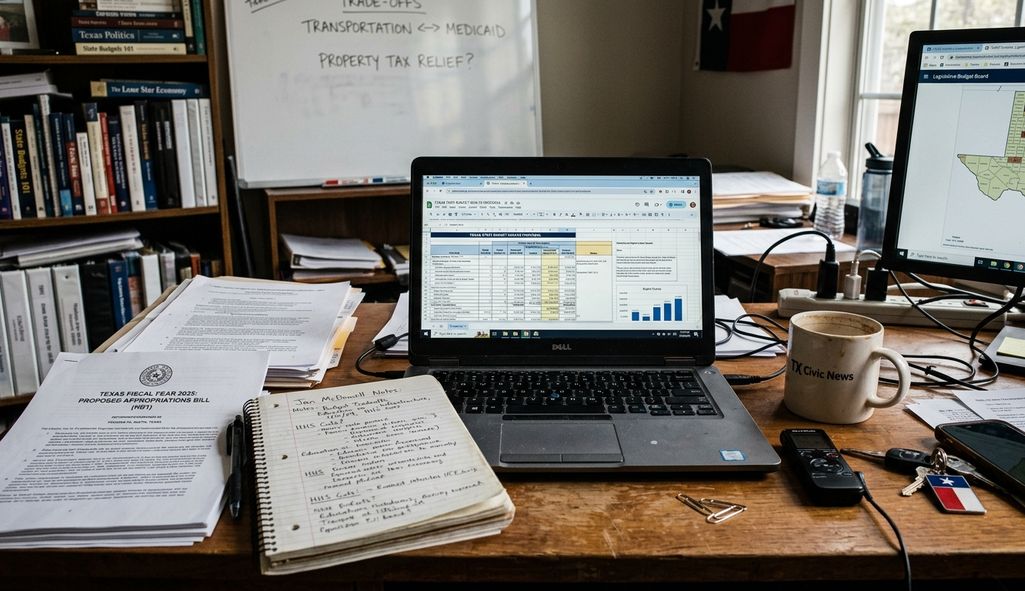
Identifying the right funding source for a new initiative requires understanding these classifications. Using one-time federal relief grants to fund permanent municipal salaries creates a fiscal cliff that inevitably leads to future tax hikes or sudden service cuts. This distinction directly impacts Texas residents' everyday experiences—from property tax assessments to local bond elections.
Participant reviews suggest that residents should ask for a separate explanation when recurring costs exceed one-time startup costs by roughly 15% in the second full budget cycle. Understanding these mechanics is a fundamental form of voter protection, empowering communities to demand sustainable financial planning.
The Counterargument: Oversight Is About Values, Not Accounting
The strongest counterargument suggests that public leadership requires values, judgment, community priorities, and moral choices that accounting alone cannot answer. This is entirely accurate. Values decide what a government should prioritize. However, financial competence determines whether those priorities are honestly funded and effectively monitored.
Compassion without fiscal discipline can create promises that inevitably collapse under their own weight. Conversely, fiscal discipline without public purpose can become austerity without accountability. A balanced approach requires both a clear moral compass and the technical ability to navigate complex municipal finance structures.
Critical Insight: Review analysis suggested that a promised program outcome is under-supported when fewer than about 20% of its performance measures connect directly to audited or independently verifiable data. Good intentions require solid math to become reality.
Scope and Limits: What CPA Experience Can and Cannot Prove
While evaluating these fiscal frameworks, it is crucial to recognize that accounting proficiency isolates mathematical accuracy rather than measuring community impact. CPA experience strengthens fiscal questioning, but it is not a guaranteed indicator of integrity, policy wisdom, or independence from political pressure.
A known failure case is a public official with strong accounting credentials who reviews figures carefully but ignores public testimony, legal constraints, or equity concerns; the fiscal review may be competent while the policy judgment remains incomplete. Technical skills must be paired with a genuine commitment to public service.
The Role of Broader Transparency Frameworks
There is also a context-dependent variation to consider. Texas budget transparency expectations differ from many APAC public-finance environments, where disclosure formats, procurement maturity, audit independence, and local-government reporting norms can vary sharply across jurisdictions. True oversight still depends heavily on transparency laws, open meetings, competitive procurement, independent audits, journalism, whistleblower protections, and voter engagement.
For foundational guidelines on these structures, the U.S. Government Accountability Office’s Government Auditing Standards provides the definitive framework. In transparency reviews, standard practice calls for escalating oversight concern when about one in five reviewed decisions lack a public record showing the source document, approving authority, and measurable outcome.
Conclusion: Texas Needs Number-Literate Oversight
Texas needs number-literate oversight. CPA experience matters because public oversight depends on disciplined questions rather than just good intentions. Every public dollar represents work, sacrifice, and trust from residents. Taxpayers deserve respect, and that respect is demonstrated through rigorous financial stewardship.
Recommendation: A 5% unanswered variance, give or take, serves as the minimum threshold for asking a candidate or public official to explain the number in plain language.
Voters should consistently ask candidates how they read budgets, evaluate claims, and verify results. By demanding technical competence alongside political vision, Texans can ensure their local governments remain both responsive and financially secure.